



Depending on our individual criteria, pes cavus foot type will present to our offices 10-20% of the time. This article clearly describes the higher plantar pressures and foot pain seen in pes cavus versus feet described as normal. The correlation between higher plantar pressures and foot pain is documented here as significantly significant, but well known to the Podiatry community. Compared to normal or pes planus feet, pes cavus feet have less surface area to weight bear. They tend to be more unstable, primarily laterally, than the 2 other foot types. However, pes cavus feet can be some of my worse pronators also. This lateral, or medial, instability takes the joints farther than they want to go, and makes the tendons work harder than necessary to stabilize. A successful orthotic device for a pes cavus foot brings the most happiness to the patient, and the most appreciation to you.
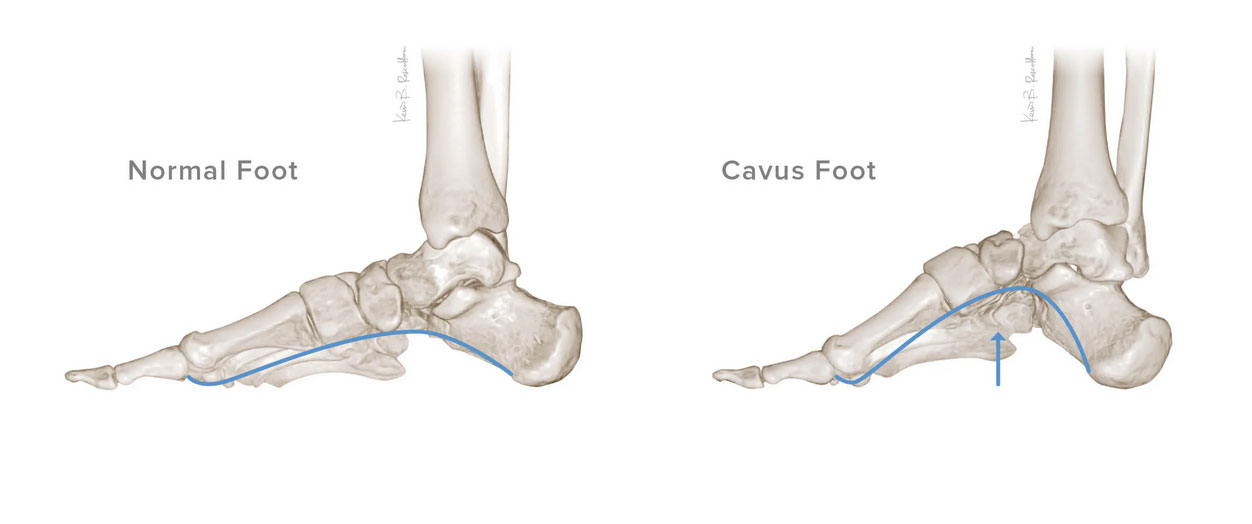
The paper studied two types of pes cavus, idiopathic and neurological. The majority of patients you will see are idiopathic, and the majority of neurological causes is Charcot-Marie-Tooth disease.
The paper describes the two most common types of foot pain as metatarsalgia and plantar fasciitis. Since these are two fairly generic diagnoses, I feel safe saying that the pain found was in the metatarsals somewhere and the heel somewhere. It is significant to me that a high level of pain was not found in the midfoot, which is clearly unsupported by this foot or the shoes worn. Only increased plantar pressures were described. We know that plantar fasciitis is not a problem related to abnormal plantar pressures, most describe the problem as excessive tension in the plantar fascia. I see more cases of plantar fasciitis in pes cavus feet over pes planus feet, and there is more plantar heel pressure in pes cavus feet, but I do not think it is a perfect 1:1 correlation. Food for thought?


