


Pediatric Flatfeet: Key Points from this Article (Part 1 of 4)
-

This is a great article with so much information for us to talk about. I will do it over 3 or 4 posts so I can take ample time discussing 1 or 2 key points for our clinical practices.
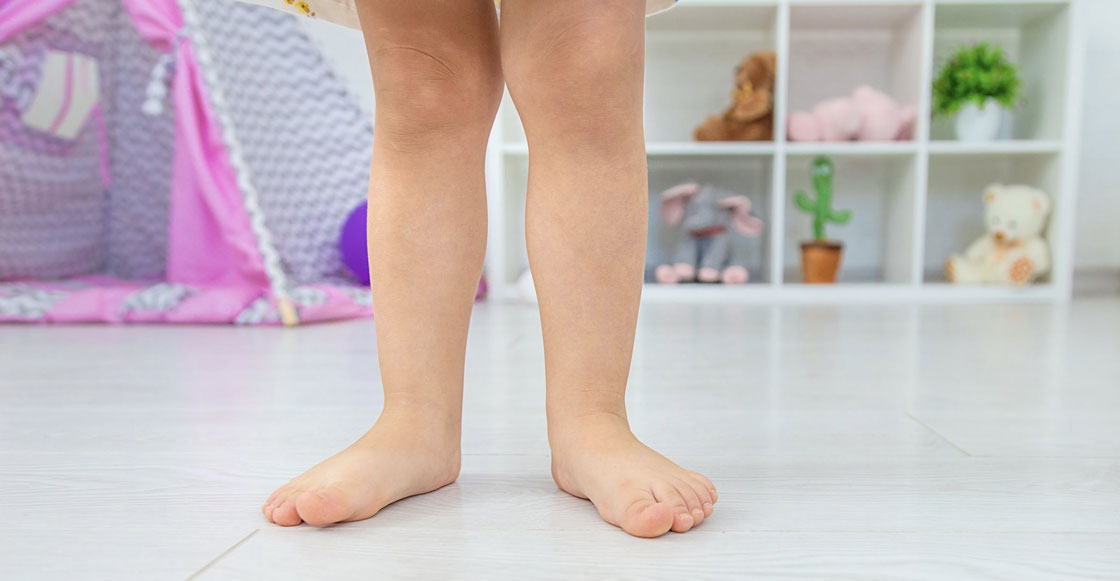
Pediatric flatfoot is often associated with hypermobility syndrome. Hypermobility is screened utilizing the Beighton scale which is simple to do. For children to be considered to have generalized joint hypermobility, they must have a score of at least 6 out of possible 9. You may be the one that first picks up this syndrome doing the patient and parents a great deal of good. Here is how the points are measured. Everyone of these children needs to be in well supportive custom orthotic devices.
Beighton Scale
A single point is awarded for each maneuver you can perform. Points are typically assessed bilaterally (on both sides of the body), making up the 9-point scale.
- Little Fingers: 1 point per hand if the pinky finger can bend backward beyond 90°.
- Thumbs: 1 point per hand if the thumb can be pushed back to touch the inner forearm.
- Elbows: 1 point per arm if the elbow hyperextends (straightens beyond a straight line).
- Knees: 1 point per leg if the knee hyperextends.
- Spine: 1 point if, while standing with legs straight, you can bend forward to place the palms of your hands flat on the floor.
The Beighton scale is a simple test done in the office and a quick note to the primary care physician to begin a more thorough assessment or referral. I emphasize at that visit that custom orthotic devices, along with a referral to a pediatric physical therapist to begin the strengthening work needed to protect those joints. These children, where I made the tentative diagnosis of hypermobility syndrome, were 3 to 15!
I have read numerous articles talking about children with flatfeet and hypermobility. The link between the two is not strong, and as most podiatrists would say that there is a link, the literature so far does not support it. Thus, the authors of this paper present a new way of testing hypermobility that is more foot and ankle dependent.
The authors present a new scale for us to use. It is called the Foot and Ankle Flexibility Index (FAFI) highlighting it as better for our professions. The 4 components of FAFI are: Lunge Test, Rest Calcaneal Stance Position (RCSP), Foot Posture Index (FPI) and 6 Minute Walking Test (6MWT).
Today, I will talk about RCSP, the only one of the 4 listed above that I do routinely. Here is a photo showing the measurement of RCSP barefoot and on top of the orthotic devices (called OCSP or Orthotic Calcaneal Stance Position). These children are max-pronated in gait which typically gives them some difficulty in activities. Their subtalar joint has a lot of motion (unless there is a concurrent tarsal coalition). They just love getting an orthotic device under that foot.
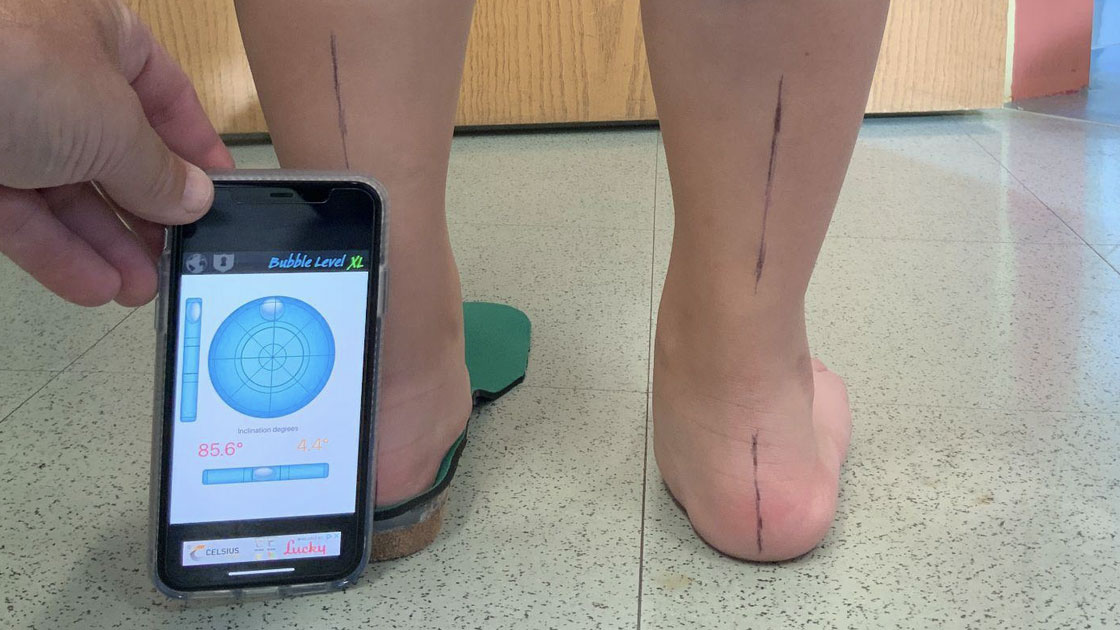
Like all biomechanical faults that patients present with, RCSP, or Kevin’s Angle described on our website, have a spectrum of values from + (or pronated) to - (or supinated). It is important that similar tests will give you the same information as long as you understand what would be normal, mildly off, moderately off, and severely off. This spectrum of presentation should give you the ability to pick out the moderate and severe cases. Here the authors were able to link these very pronated children with hypermobility.
Next week I will discuss the Lunge Test as part of FAFI.
