


Case Study: Custom Foot Orthotics for an Avid Runner
-

Mr. CK is a very active 45 year old male who is experiencing pain and swelling in his left foot. He is an avid runner, averaging 30 miles per week, averaging a pace of 9 minute per mile. As part of his training he does speed work at the local high school track, as well as hill repeats. In addition he works out at the gym doing strength and flexibility training. He wears a neutral running shoe when training, and rotates his shoes regularly. His present condition started about two months ago as a vague soreness in the middle of the left forefoot which came on during the middle of his longer runs, but was not severe enough to make him stop running. The soreness would subside when he was done running. The soreness started to slowly progress over time, happening earlier in the run, and was accompanied by a vague swelling as well. He tried to ice the foot after the run, and took a few days off of running but the problem persisted. He decided to go see his family doctor, who ordered an xray, which was determined as negative by the local radiologist. The diagnosis at that time was Morton’s neuroma, the patient was instructed to stop running for a few weeks, to wear more supportive shoes, and if he didn't improve to see a specialist. He decided to ignore the doctor’s advice, and continued to run, and suddenly experienced a severe sharp pain on the top of the left foot during the middle of the run and had great difficulty placing any weight on the affected foot. He had to call his wife at that point to come pick him up in the car and take him home, along with a very stern “I told you so!”.
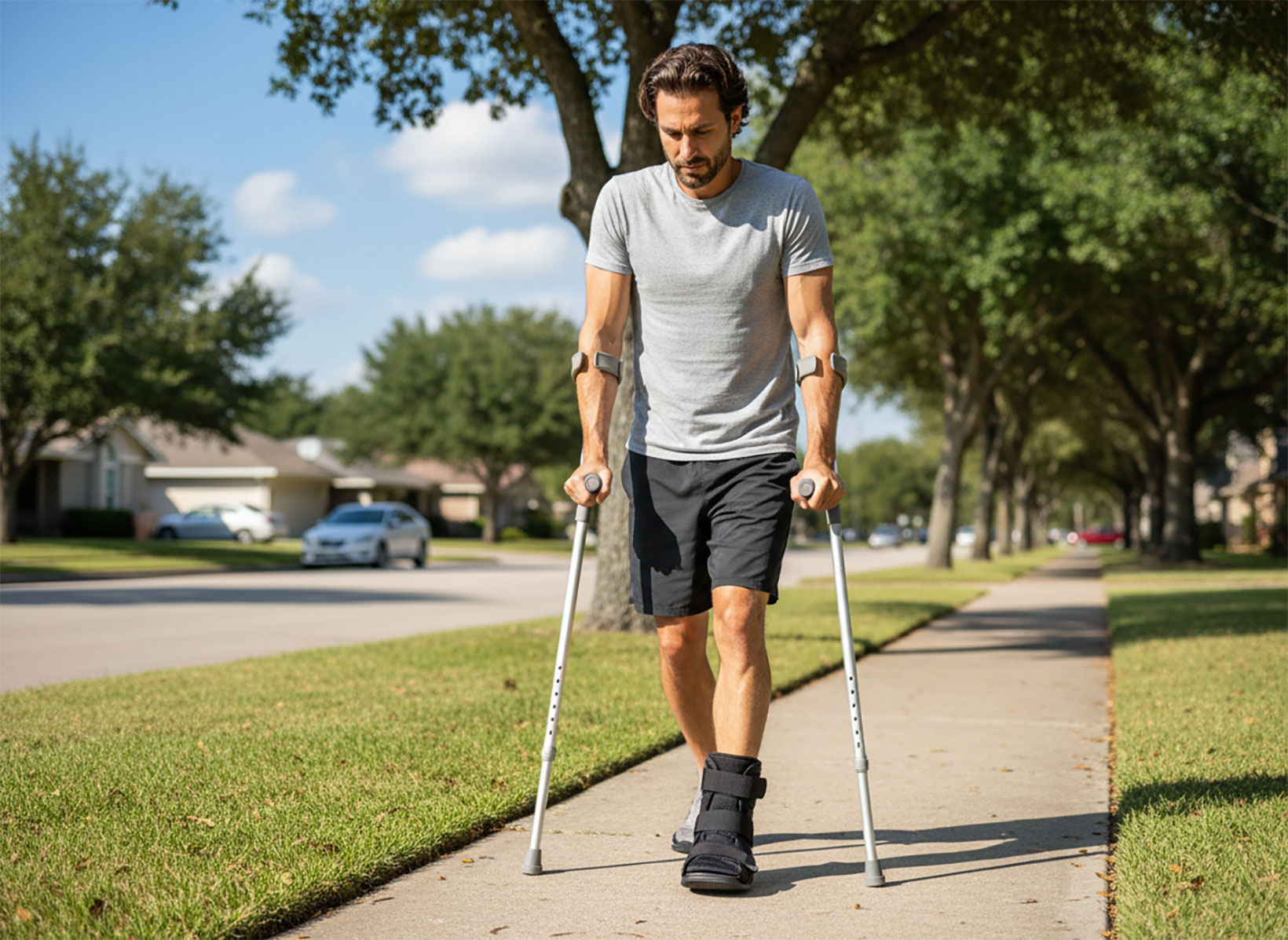
The patient presented to the office the next day with an extreme limp and antalgic gait of the left side. He is 5’9” tall and weighs 170 lbs and appears in extremely fit condition. He denies any chronic illnesses, takes no prescription medication, and has no apparent food or drug allergies. He takes multiple supplements for his well being, including a multi vitamin with minerals including calcium, Vitamin D3 and magnesium. Lower extremity examination findings are essentially non contributory, with circulatory, neurological and dermatological systems within normal limits. He has an ectomorphic body type, with a neutral foot structure. Range of motion, muscle testing and gait analysis were deferred at this time.
Examination of his left foot reveals localized edema, ecchymosis and warmth to the dorsal surface centered near the distal third metatarsal area. There is exquisite tenderness to the area, and the patient has difficulty moving the left foot and toes. X-rays are taken, in the anterior-posterior, and lateral views and reveal a transverse, non-displaced fracture line through the distal one-third of the third metatarsal. The diagnosis of pathological fracture was determined.
A consultation was performed with the patient about his condition, he was dispensed crutches and a below knee walking boot, with instruction to be partial weight bearing with both the crutches and boot for the first week, then if he felt better, then with the walking boot alone for an additional four weeks. He was advised he could remove the boot for non weight bearing activities only, to use ice and elevation and over the counter pain medication as needed. He subsequently improved greatly and after approximately two weeks later decided to increase his activities against doctor’s advice. The pain and swelling persisted, at a more tolerable level but the patient noted his third toe was no longer laying flat and appeared shorter relative to the other toes. Five weeks after the initial examination the patient returned, follow-up x-rays of the left foot revealed displacement of the fracture line, with elevation of the distal fragment, extensive bone callous formation present. He was then placed in a below knee fiberglass walking cast for an additional four weeks and went on to radiological and clinical healing without further complication. Subsequent x-rays showed significant shortening and elevation of the third metatarsal with floating toe syndrome of the third toe.
The patient was then instructed he could gradually resume his running program but was cautioned about the possibility of further pathology in the foot due to his altered metatarsal parabola, including, but not limited to transfer stress fractures, and hammertoe deformities. He also started to experience pain in the dorsal lateral midfoot and rearfoot area, with tenderness elicited in the sinus tarsi. Functional orthotics were recommended at this time, to help prevent further foot and leg pathology due to compensation for his injury and accommodate his altered metatarsal parabola.
Discussion:
Balancing forefoot conditions with a functional orthotic device often involves a certain amount of ingenuity utilizing a combination of frame design, posting extension construction and accommodative padding. The clinical objective in our case of the overzealous runner is to attempt to fill in the gap under the elevated third metatarsal, prevent overload of the adjacent second and fourth metatarsals, prevent further contraction of the third MTPJ, and also prevent further compensatory pathology such as lateralizing the forefoot leading to sinus tarsitis.
KevinRoot Medical offers several possible options to achieve our clinical objectives.
Helping patients successfully return to their desired activity levels and achieve their lifestyle goals offers the clinician challenges, particularly with somewhat non compliant patients, but also offer great satisfaction!
