


The Orthopedic Surgeon Who Went to Prison Over an Enrollment Form
-

An Orthopedic Surgeon Went to Prison Over a Medicare Enrollment Form. Seriously.
Most doctors worry about audits, denials, and prior authorizations.
Few worry that a Medicare enrollment form could lead to a felony conviction and nearly three years in federal prison.
But that's exactly what happened.
The Setup
Back in 2016, an orthopedic surgeon partnered with a medical supply businessman to start a DME company.
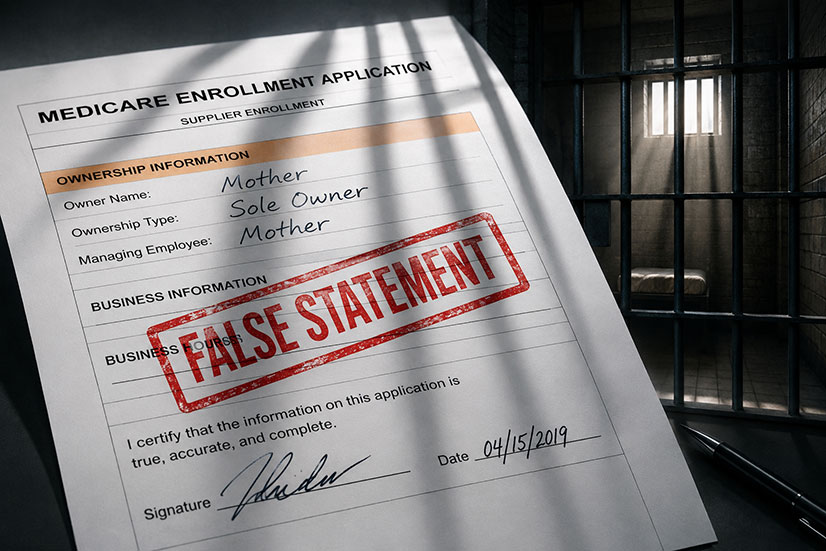
Instead of listing themselves as the owners, they listed the surgeon's mother as the sole owner and managing employee, even though she wasn't actually running the business.
Why?
According to court records, this arrangement may have helped them avoid some of the costs and administrative requirements associated with operating a traditional DME supplier.
At the time, it probably seemed like a clever workaround.
It wasn't.
The Mistake That Changed Everything
Fast forward to 2019.
The company submitted an updated Medicare enrollment application to report a change in business hours.
On that application, they again stated that the surgeon's mother was the sole owner and managing employee.
Federal investigators disagreed.
The government alleged that the information on the enrollment paperwork was false.
The result?
A federal conviction for making a false statement to the government.
The surgeon was sentenced to 33 months in federal prison.
Let that sink in.
Not for performing surgery.
Not for patient care.
Not for billing fraud.For information submitted on an enrollment form.
The Court's Message Was Simple
The surgeon argued that the form was voluntarily submitted.
The appeals court wasn't persuaded.
Their position was essentially:
"If you submit information to Medicare, it must be accurate."
Whether the form was required or voluntary didn't matter.
Submitting false information was enough.
What Can We Learn From This?
1. Medicare Enrollment Is Not "Just Paperwork"
Many providers treat enrollment forms as administrative busywork.
CMS does not.
Enrollment documents are legal certifications.
Every signature matters.
2. Don't Get Creative With Ownership Structures
If you're the owner, be the owner.
If you're the managing employee, be the managing employee.
Trying to create shortcuts can create very expensive problems.
3. Small Compliance Issues Can Become Big Problems
Many providers have been deactivated because:
- Addresses weren't updated
- Practice locations weren't disclosed
- Ownership changes weren't reported
- Enrollment information became outdated
Most never expected those issues to become serious.
4. Have Someone Responsible for Enrollment
Every practice should know:
- Who manages enrollment
- Where passwords are stored
- When updates are required
- Which PTANs and supplier numbers are active
If nobody owns the process, mistakes eventually happen.
5. Professional Help Is Usually Cheaper Than Fixing a Problem
The cost of proper enrollment support is small.
The cost of deactivation, appeals, legal fees, lost revenue, and potential penalties is not.
The Bottom Line
Most providers will never face a situation this extreme.
But the lesson is universal:
Treat Medicare enrollment documents with the same care you would a patient chart.
Because once CMS determines something is inaccurate, fixing the problem can be far more difficult—and far more expensive—than doing it correctly the first time.
Protect your practice.
Protect your PTAN.
Protect your livelihood.Because no physician ever says:
"I wish I had spent less time making sure my Medicare paperwork was accurate."
