


Pediatric Flatfeet: Key Points from this Article (Part 3 of 4)
-

The 3rd aspect of the Foot Ankle Flexibility Index is called the Foot Posture Index. The Foot Posture Index is mainly a research assessment to classify the foot type, but also used in clinic situations. The patient is barefoot. The six FPI criteria are evaluated (palpation of the head of the talus, supramalleolar and inframalleolar curvature on the lateral side, frontal plane of the calcaneus position, talonavicular prominence, medial arch congruence, and forefoot abduction/adduction), and rated on a scale of −2, −1, 0, 1, 2, and then summed for total score (−12, more supinated, to +12, more pronated) for each foot. This is a great tool at the disposal of researchers, but it can be part of your hypermobility screening. I schedule this at a separate visit.
This is a wonderful test to define Pronation Syndrome and Supination Syndrome. It is based on the above 6 observations, not measurements, defining feet along the pronation and supination spectrum. The 5 outcomes that could affect your orthotic prescription writing are severe pronated (+10 to +12), mild to moderate pronated (+5 to +9), normal (0 to +4), mildly supinated (-1 to -5), and severely supinated (-8 to -12). I love the test since it stops the examiner rushing through other measurements, and like gait evaluation, forces the examiner to observe. This slowing down is vital to the process of examination. I have always felt it is better to observe than make an
exact measurement, yet exact measurements also can be crucial to our understanding of what is happening. It is quite ironic that I placed this examination last in order in my personal biomechanical exam, when I could easily have placed it first to get the examiner focused. It is great for students to learn since it helps develop observational skills.
Observation is a vital part of the process of the biomechanical examination. Each observation of the foot posture index is scaled from +2 (maximally pronated), +1 mild pronation, 0 for normal, -1 mild supination or -2 (maximally supinated). After each observation is scored, and the total calculated, the 3 categories are: 0-4 normal foot, over 4 pronated foot, under 0 (minus numbers) supinated foot. Hopefully, you can see how this will influence orthotic manufacture for each foot.
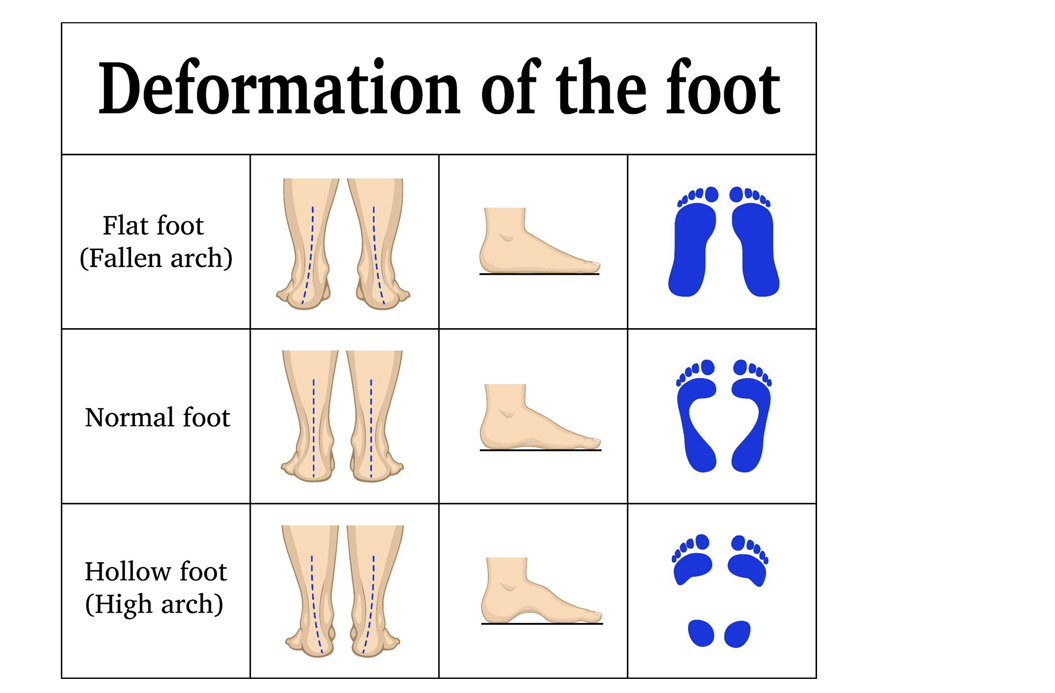
What are these 6 observations? They are:
- Standing Position of Talar Head (more medial, close to neutral, more lateral)
- Arch Height (flat, normal, high)
- Heel Bisection (everted, vertical, inverted)
- Curvature Above and Below Lateral Malleolus (pronated, neutral, supinated)
- Midfoot Medial Structure (medial bulge with convexity, normal, lateral shift with concavity)
- Forefoot to Rearfoot from Posterior (abducted, straight, adducted)
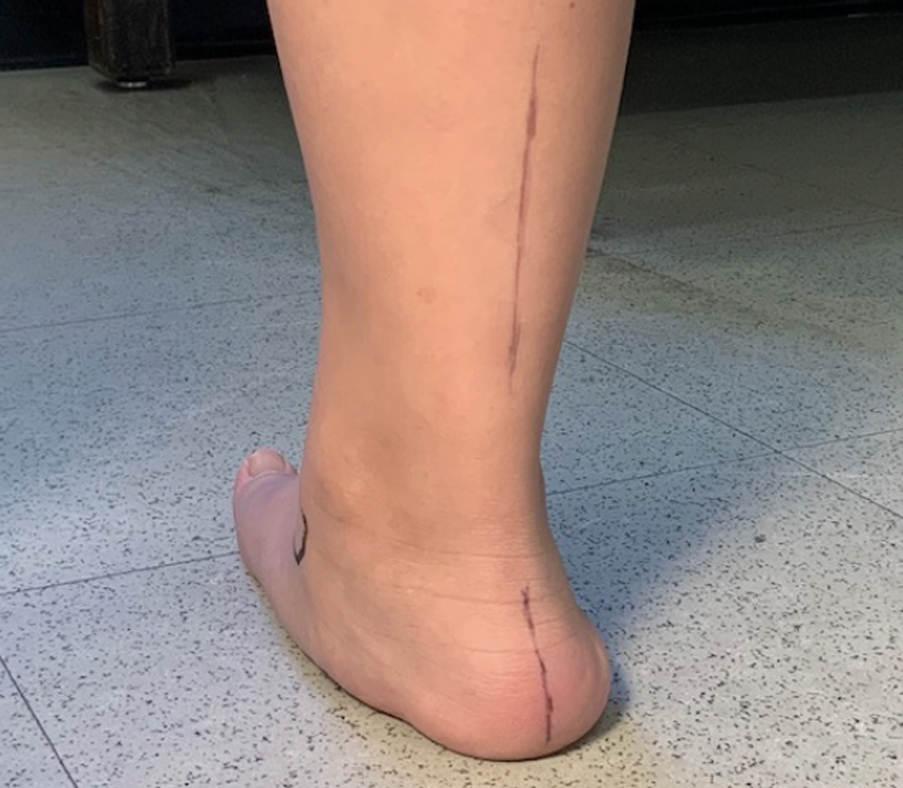
From any angle you can observe components
of the FPI. Here +1 or +2 points are given for each of the following:
low talar head, low arch height, everted heel
Bisection, pronated lateral ankle curvature,
bulging medial arch, and forefoot abduction
on the rearfoot. Definitely deserves +12 or highly pronated.
Foot Posture Index Total Score (Right) _____ (Left) _______
- Talar Head (Right) _____ (Left) ______
- Arch Height (Right) _____ (Left) ______
- Heel Bisection (Right) _____ (Left) ______
- Curvature Lat Mall (Right) _____ (Left) ______
- Midfoot Medial Structure (Right)______ (Left) ______
- FF to RF Transverse Plane (Right)______ (Left) ______
For each of these 6 points, you take the pronated side and give it either +1 mild overpronation or +2 moderate to severe overpronation, and for the supinated side either -1 mild supination or -2 for moderate to severe supination.
