


Pediatric Flatfeet: Key Points from this Article (Part 4 of 4)
-

I will end this mini-series on Foot Ankle Flexibility Index by walking about the 6 minute walk test (aka 6MWT). The authors definitely found a correlation with hypermobility and slower walk times. I think this is crucial. With this info, you can divide a table into the following.
Clinical Finding
Painful in Activities
Non-Painful in Activities
Right Side
Left Side
Right Side
Left Side
+ 6MWT
☐
☐
☐
☐
− 6MWT
☐
☐
☐
☐
+ Achilles Excursion
☐
☐
☐
☐
− Achilles Excursion
☐
☐
☐
☐
+ Heel Eversion
☐
☐
☐
☐
− Heel Eversion
☐
☐
☐
☐
+ Pronated FPI
☐
☐
☐
☐
− Normal/Supinated FPI
☐
☐
☐
☐
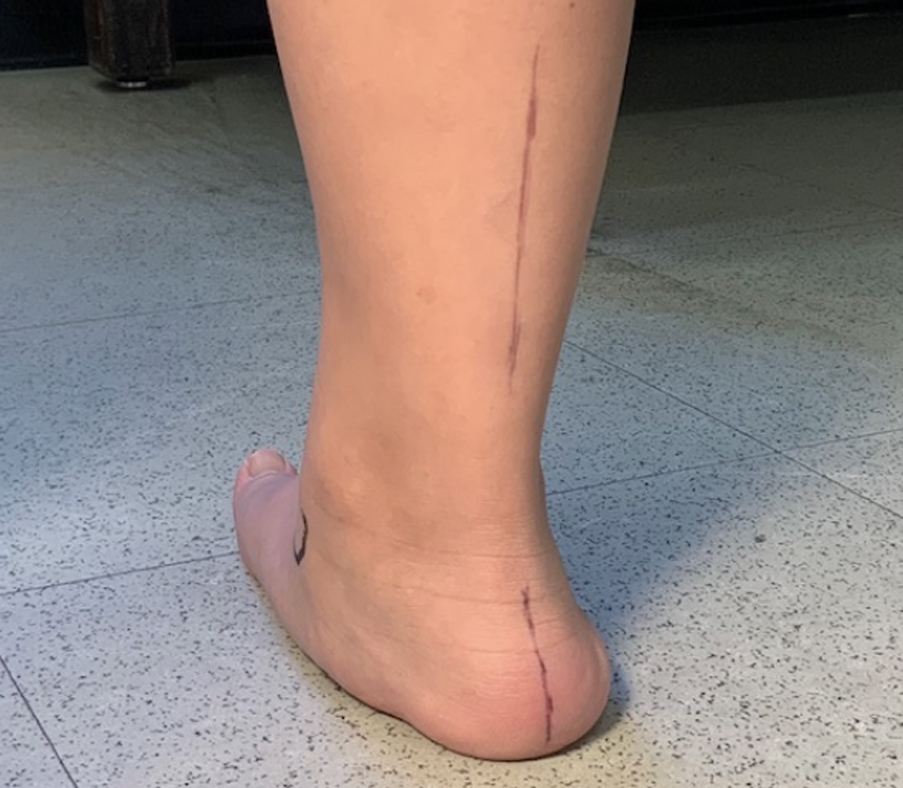
Their results found a relationship between hypermobility and 6MWT; therefore, it is necessary to include variables for assessing muscle fatigue to determine whether children with greater foot and ankle hypermobility may experience more fatigue and consequently walk shorter distances. The importance of this is that the literature supports treating painful pediatric flatfoot with orthotics, but not non-painful. Since children avoid pain, and many children with pediatric flat feet are so out of shape when you see them, or worse at running than their entire class, we have to add this into our evaluations.
Other possible confounding variables considered by the authors include how body weight may influence physical activity and foot and ankle hypermobility. For this reason, the study calculated these factors, obtaining data that suggested that the lower 6MWT values are not influenced by BMI. It was also found that there is no statistically significant relationship between foot and ankle hypermobility and BMI. They cited one study that found that young dancers with increased generalised joint hypermobility had reduced physical capacity as assessed with the 6MWT.
In conclusion, the findings of this study suggest that children with greater foot and ankle hypermobility have a flatter/pronated foot posture, a greater range of ankle dorsiflexion, and a decreased physical ability to walk. Hypermobility needs both external support and muscle strengthening. Therefore, these children deserve good custom orthoses and a lower extremity muscle strengthening program.
