


A5512 vs A5513 or A5514
-

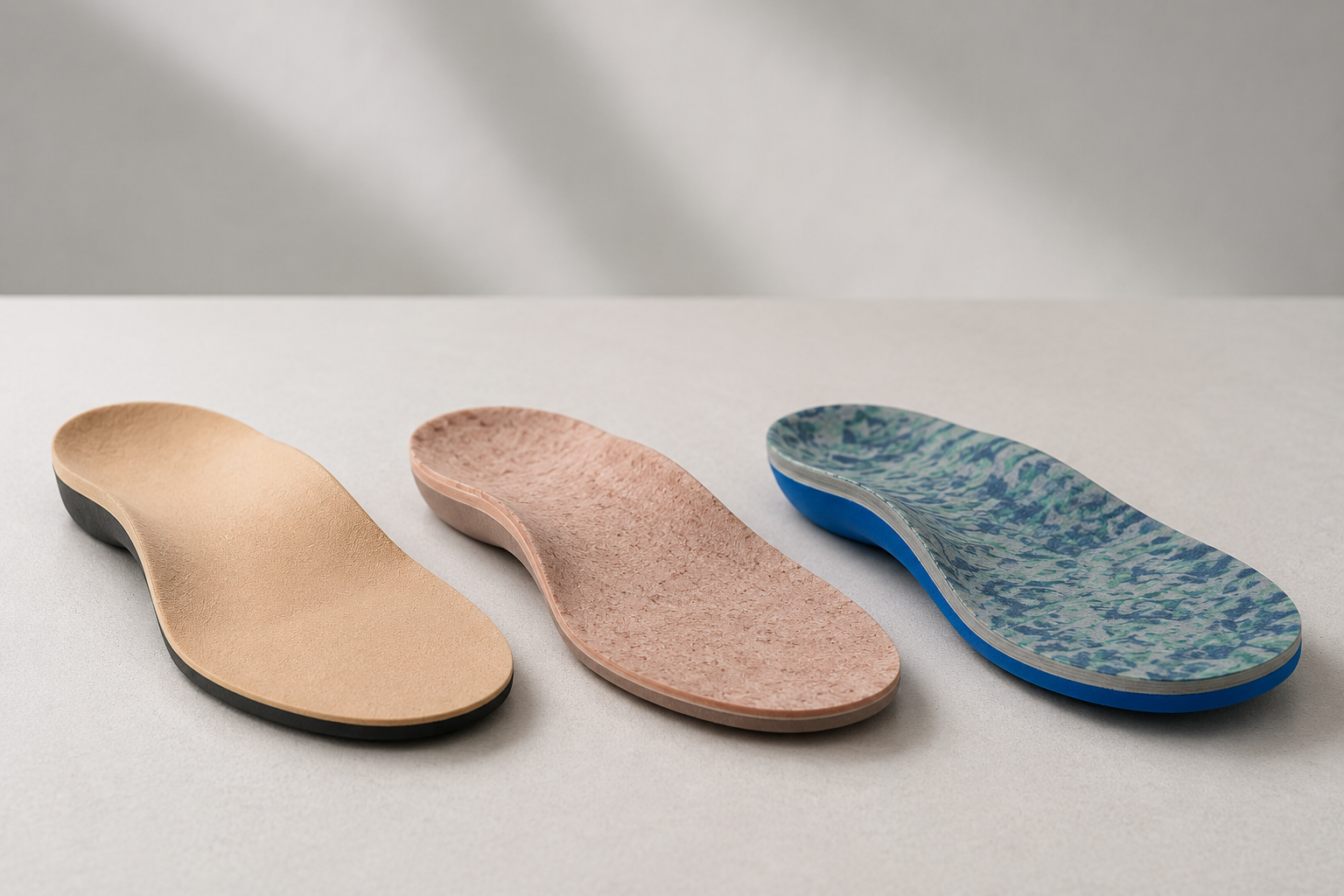
This is a continuation of the past week’s discussion on whether there is a bell curve one should adhere to for determining which type insert (heat or custom) to provide to a specific patient.
In last week’s column it was pointed out that Medicare did not have an expected bell curve for the type of therapeutic inserts you should be providing to your patients. The reality is that there are statistics which CMS does compile for every CPT or HCPCS code. The number and types of inserts which various types of providers dispense is no exception. This data, Part B Medicare Analysis Data (BMAD) however, these statistics should only be construed as an analysis of what was provided. As you will see below, these statistics should not be inferred to indicate what Medicare expects for any specific provider. Additionally there are other influencers determine where your practice may fit within the BMAD data.
In reviewing the data it appears that across the board, for all providers regardless of their specialty, provide 50% of patients with heat molded inserts and the other 50% either a custom molded (A5513) or custom milled (A5514) insert.
Let’s dissect this data to determine why following the Part B BMAD data should not be a model for your practice.
- The demographics of your practice may be in a high retail upper class to wealthy area where patients have fewer comorbidities and can be appropriately fit with heat molded inserts. There may also be demand for one stop shopping as noted last week. This would influence higher use of heat molded inserts. Conversely, your wealthy patients may demand a custom functional foot orthotic. This while not payable by Medicare(self-pay) may reduce the number of custom inserts only or reduce both custom and heat molded inserts you provide. A wash perhaps? But perhaps not?
- The demographics of your practice may demand custom devices. Simply put, you may be a specialist; you see more complex cases. Perhaps it’s also because other physicians refer their difficult cases to you for specialty diabetic foot care, or these patients have simply gravitated to your practice. For whatever reason, it could be quite dangerous to follow the BMAD curve and gravitate these difficult patients towards to heat molded inserts. This certainly would drive the utilization data upwards for custom inserts for your practice.
- Again, because you see more complex cases, perhaps in your medical opinion the patient requires a custom fabricated orthotics (e.g., L3000) as provided by KevinRoot Labs. This is a cash service and likely would not enter the BMAD data unless the patient insists a claim be sent to Medicare for rejection or must be sent to Medicare to facilitate a rejection in order for the claim to be processed by the patient’s secondary insurance. This will certainly reduce the number of custom inserts in your profile.
It is easy to see thus how specialty providers, such as podiatrists treating the highest risk diabetic population might skew the data in one direction or the other. Yet in both cases, you would be providing a higher level of care for patients who require such treatment.
In the end, there are no coverage guidelines dictating specific requirements for a custom insert (molded or milled) vs. heat molded. Which type of inserts you provide comes down to what is best for the patient and how well you craft your documentation. A well thought out dissertation for the type of insert you provide for any specific patient is all you should be concerned about. One example includes; “The patient had previous ulceration and infection and has multiple sites of plantar metatarsal head prominence. The use of custom inserts is appropriate and medically necessary.”
Chasing curves and statistics is likely to lead to more negative outcomes and may result in liability trouble for you, should you provide a lessor quality insert to a patient with higher needs. This is not only true for inserts custom vs heat molded but for just about every procedure we perform. Always do what is medically necessary for the patient. Having taken college level statistics, reaffirms the old adage: “Statistics may lie and liars use statistics”.
For more information on Root’s PDAC validated inserts, contact your KevinRoot Medical client manager.
- The demographics of your practice may be in a high retail upper class to wealthy area where patients have fewer comorbidities and can be appropriately fit with heat molded inserts. There may also be demand for one stop shopping as noted last week. This would influence higher use of heat molded inserts. Conversely, your wealthy patients may demand a custom functional foot orthotic. This while not payable by Medicare(self-pay) may reduce the number of custom inserts only or reduce both custom and heat molded inserts you provide. A wash perhaps? But perhaps not?
