


Prosthetics when
-

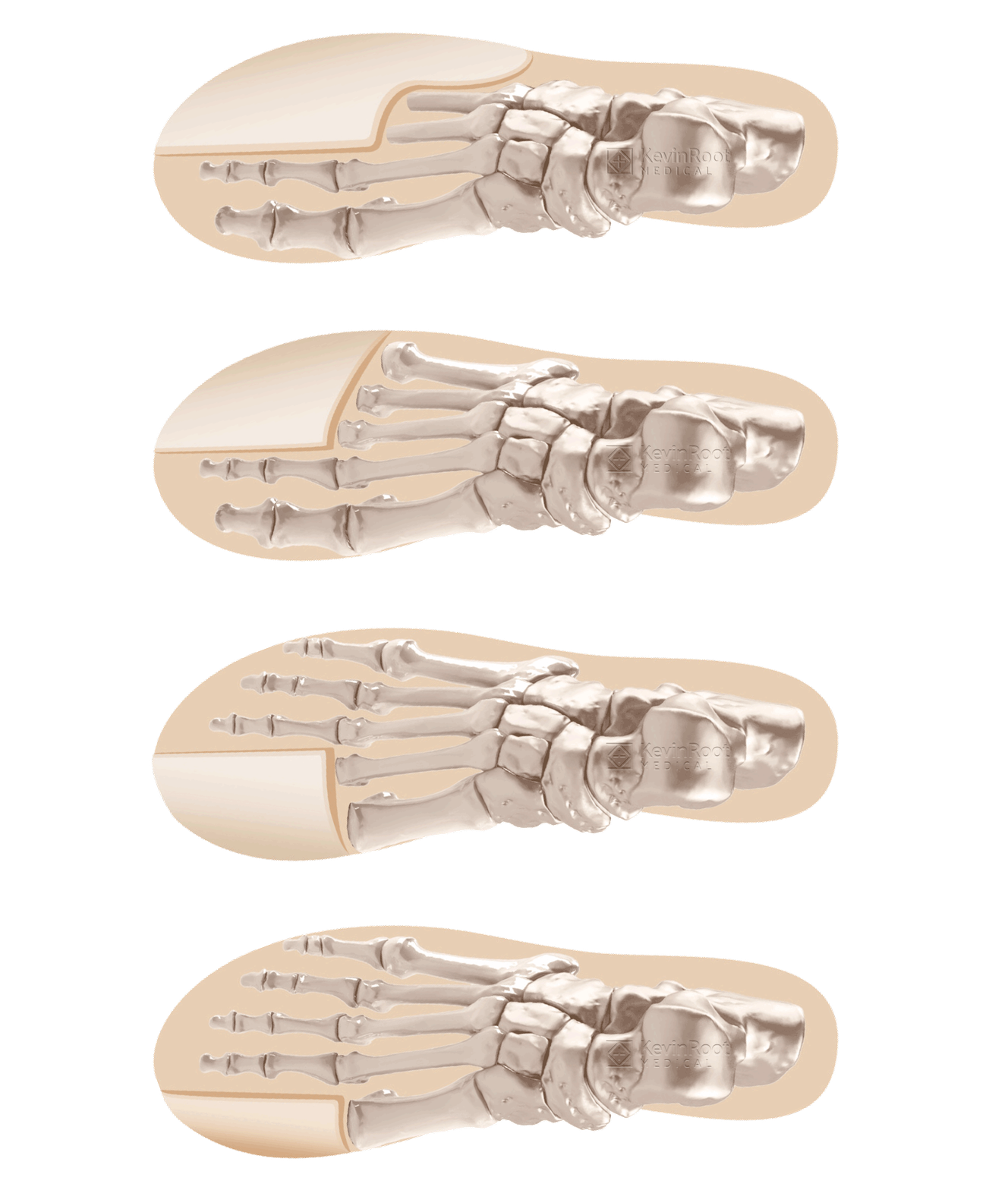
Many patients, including those with diabetes, PAD, post trauma, etc. frequently present to the podiatrist’s office with relatively minor digital and forefoot amputations. These may or may not require minor accommodations in their foot orthotics. An example may be a patient with a single distal phalangeal amputation of one of the lessor toes. To prevent shoe rubbing a small plug may need to be added to the orthotic.
When a patient has a distal cyme amputation of the hallux, then depending on what deformity (ies) the rest of that foot has, the patient may require more than a single simple accommodation. Patients with substantial losses of forefoot integrity such as a TMA, first or fifth ray resection, will have both balance and shoe fitting issues requiring more than a custom orthotic with minor accommodations.
From both the clinical and coding/coverage perspective, this latter group of patients will at least require a custom fabricated toe filler, described by L5000. It is noteworthy to note that toe fillers are not lower limb or foot orthotics. L5000 devices will not be found in the orthotic section of any HCPCS coding textbook. L5000 is listed as the first prosthetic code within the lower limb prosthetic grouping in both coding texts and Medicare and in other third-party coverage policies.
It thus is not subject to the ridiculous Same or Similar which AFOs are subjected to. Thus, it can be replaced on a medical necessity basis. One example is a patient who may have undergone a first ray resection one year ago and has a custom fabricated toe filler. That patient subsequently undergoes a complete Trans Metatarsal Amputation. A very different toe filler will now be required and will now be covered by Traditional Medicare. This so long as your chart substantiates what has transpired and how the patients’ gait and shoe fit have changed since the second amputation. It is noteworthy to note that the patients’ systemic diagnosis (e.g. diabetes, PAD, etc.), while important, is NOT a factor in limiting or determining medical necessity. It is the local findings which will determine medical necessity.
The above leads to the next frequently asked question, is a toe filler subject to all the archaic requirements of the therapeutic shoe bill for diabetes?
The answer is a resounding no! There is no need to obtain signatures, chart notes, etc. from the MD/DO treating the diabetes for a toe filler. It is however noteworthy to note that one cannot provide a shoe insert (A5512-A5514) on the same foot as a toe filler. Once the medical necessity for a toe filler has been made, you should stick with that. Any auditing entity would wonder how a patient could have a medical necessity for both a diabetic shoe insert and toe filler on the same foot at the same time? Of course if the patient requiring a toe filler is diabetic and they otherwise qualify for therapeutic shoes (on both feet) and a therapeutic insert on the intact limb, then those HCPCS codes are subject to the therapeutic shoe for diabetes policy.
Examples of various toe fillers and other codes which most podiatrists should be aware of in the lower limb prosthetic coding section will be discussed in next week’s bulletin.
