How do we Distinguish between Plantar Fasciitis and Other Forms of Plantar Heel Pain?
-

This is a good article attempting to counsel against diagnosing every patient with plantar heel pain as having plantar fasciitis. We all can order functional orthotics for standard plantar fasciitis and I have attached the KevinRoot Medical standard orthosis for this diagnosis here, the P13.
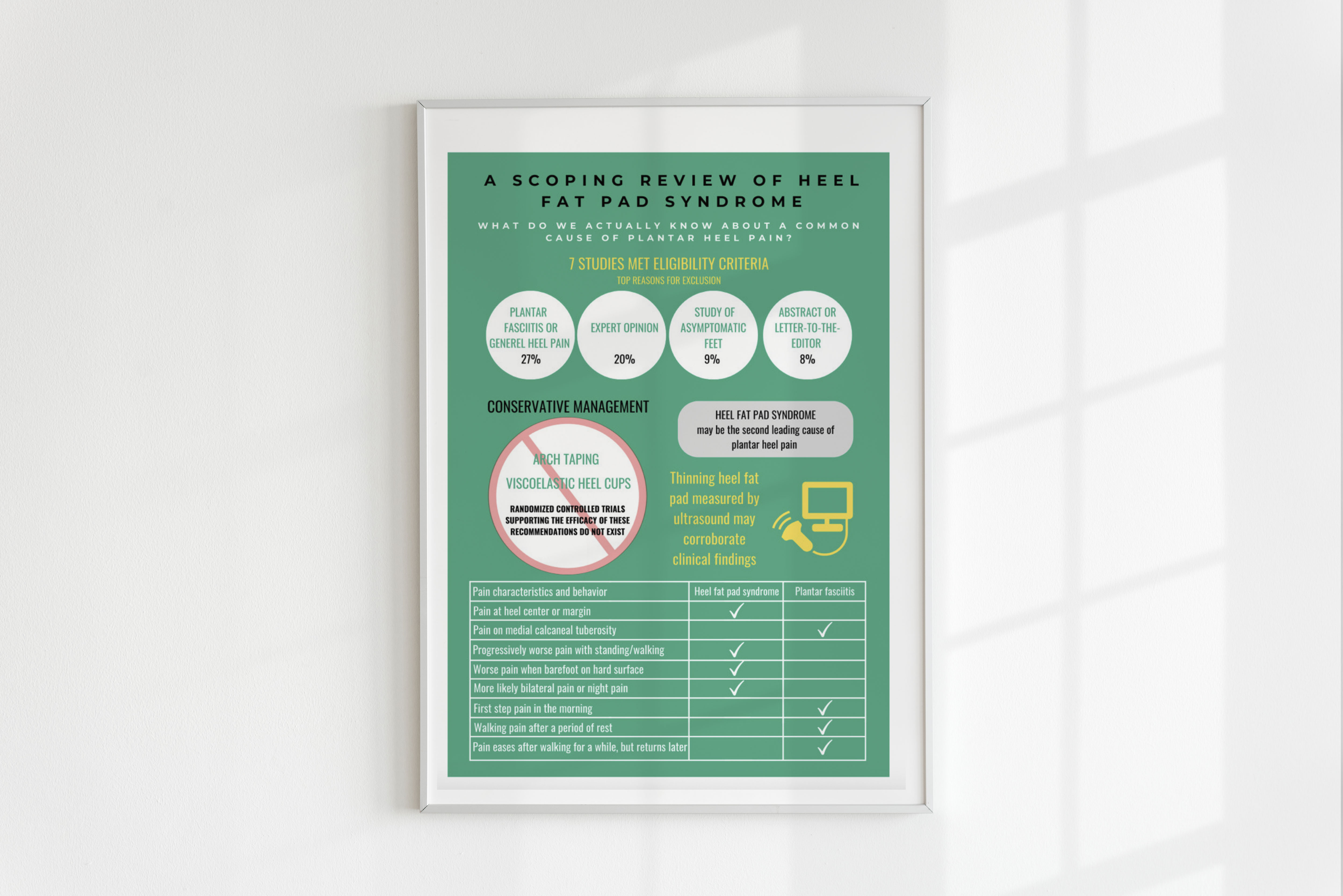
The article compares the symptoms for plantar fasciitis and heel fat pad syndrome. The image from the article has many fine points about separating these two diagnoses.
There is no attempt in this article to make solid treatment recommendations for each. I find that plantar fasciitis responds 99.9% of the time to our basic treatments of a good orthotic device, some form of arch taping, achilles stretching, ice massage and perhaps PT. The 20% of plantar heel pain patients that do not improve have another diagnosis like heel fat pad syndrome, or HFPS, and your treatment course should be altered due to this lack of response.
I have borrowed the list from Book 2 of my series Practical Biomechanics for the Podiatrist to help you to be creative with your plantar heel pain patients who may be slow to recover. You can see that this could be for both the diagnoses listed in this article and others requiring immobilization like Stage 3 Plantar Fasciopathy and Calcaneal Fractures. These are only mechanical treatments, with shockwave and injections commonly used with PT.
Common Mechanical Changes for
Plantar Heel Pain (with the common ones in RED)
- OTC and Custom Orthotic Devices
- Heel Cushions
- Avoid Strong heel strike
- Avoid Barefoot
- Avoid Zero Drop Shoes 438
- Heeled Shoes
- Taping
- Achilles Stretching
- Plantar Fascial Stretching
- Metatarsal Doming and Single Leg Balancing
- Limitation of Toe Bend
- Physical Therapy Prescription
- Cam Walker with or without Crutches in the Immobilization Phase
- Plantar Fascial Rest Splints
- Plantar Fascia Socks
- Slippers with Arch Support