


Deep Dive into Forefoot Varus
-

This is a nice study out of Brazil highlighting the relationship of 3 weight bearing measurements: Tibial Calcaneal or Kevin’s Angle (here just called the Rearfoot Angle), Navicular Drop, and Foot Posture Index with the Forefoot Varus Angle measured non-weight bearing. In school, I was taught that Forefoot varus, without any significant Tibial Varum component, would compensate with subtalar joint pronation creating heel eversion. This was the body’s attempt to bring the forefoot in full contact with the ground. This article substantiates that claim, and also correlates it to Navicular Drop and a pronated Foot Posture Index. These 2 measurements are usually just part of foot classification in research, but very fun to do every now and then on your patients. Let me know if you want to learn more about the Navicular Drop Test or the Foot Posture Index Classification of foot types.
I have attached the illustration of Kevin’s Angle (aka Tibial Calcaneal angle).
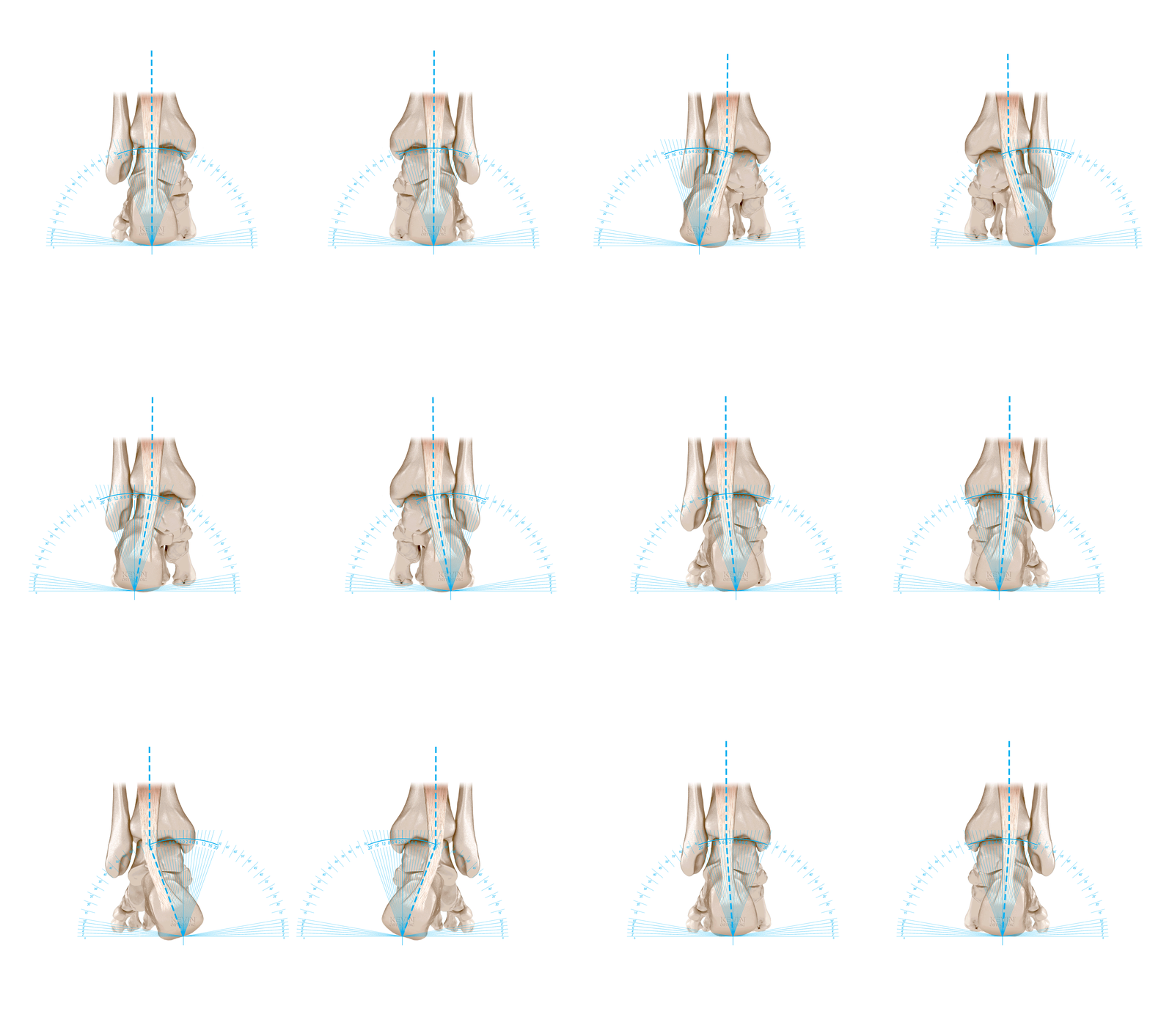
We all know that a positional problem which can look like forefoot varus (a structural abnormality not ideal) is forefoot supinatus. In growing children, a forefoot supinatus case may change enough in as little as 6 months needing another orthotic device. That means, when you measure forefoot varus, you should re-evaluate every 6 months, and document that the orthos may need changing AS THE FOOT IMPROVES. This is a happy thought for parents when advised.They want their child to improve, and many feel guilty enough for waiting so long to actually start the process of custom orthotic devices in their child.
So, this article states that patients with 4 independent measurements are inter-related. Forefoot varus can, and normally does, produce subtalar joint hyperpronation (aka over pronation, excessive pronation, or medial instability). We have learned how to support the foot to help these patients. We know that a high percentage (I wish I knew this number), since they have some amount of forefoot supinatus will improve foot structure by our control of the rearfoot. What part of the typical orthotic device controls the rearfoot?? These include deep heel cups, rearfoot posts, good medial arches, wider frames, and perhaps adding medial heel skives, some rearfoot inversion, etc.
Here is what the article implied about this mysterious positional forefoot varus-like problem.
“However, varus forefoot malalignment is believed to be a congenital abnormality that originates in the failure of the talar neck to fully derotate from its fetal position, which could indicate that forefoot varus in fact precedes subtalar joint hyperpronation. Nevertheless, it should be mentioned that recent research has shown evidence contrary to this hypothesis, suggesting that the source of forefoot varus malalignment may be found in an alterable soft-tissue deformity rather than in an unalterable bony torsion of the talus”.
I hope you get a chance to review this article. There are many references to the links between hyperpronation and injuries summarized in this statement from the article.
“Specifically, subtalar hyperpronation has been associated with injuries such as plantar fasciitis, Achilles tendinopathy, medial tibial stress syndrome, lower-extremity stress fractures, posterior tibialis tendon dysfunction, patellofemoral pain syndrome, and anterior cruciate ligament ruptures. There is also evidence that forefoot varus is associated with injuries such as patellofemoral pain syndrome, hip osteoarthritis, and low-back pain.”
Please do look at how they measure forefoot varus which may be easier than how I learned as the goniometer is held at the heel. I will have to try it this way. Here is their conclusion.
“A significant relationship between forefoot alignment, navicular drop, rearfoot angle, and FPI was observed in young individuals. Moreover, the forefoot varus measurement was able to predict the variability in subtalar hyperpronation obtained in the other clinical weightbearing measurements. Therefore, these findings support previous theoretical assumptions that stated that individuals with forefoot varus present increased subtalar pronation in weightbearing circumstances. Clinicians should not overlook forefoot alignment when prescribing foot orthoses for treating patients with foot misalignments.”
