Athletic Taping and the Lessons on Mechanics
-

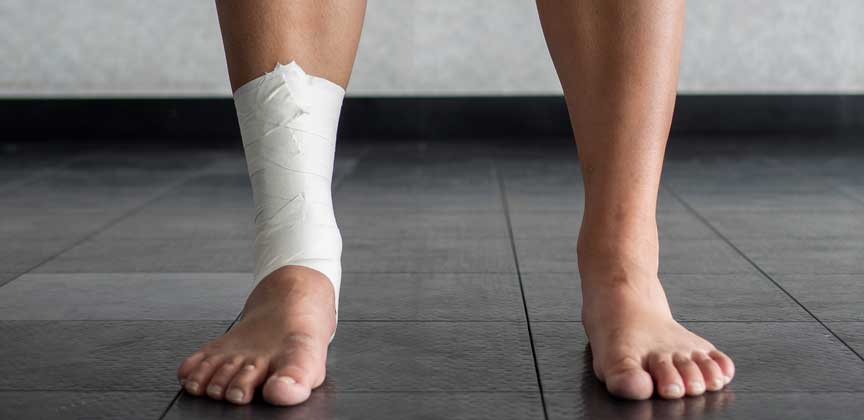
This article has 3 good mechanical points that I want to review. The main goal of most ankle athletic taping is to prevent ankle sprains, therefore it helps prevent excessive inversion or decrease inversion moments across the ankle joint and subtalar joint. Moments are rotatory forces and accurately describe the 3 dimensional rotatory force of a triplanar motion like subtalar and ankle supination or pronation.
What were the 3 mechanical points brought up by this paper with freshly applied athletic taping? With the goal of preventing inversion, it will pronate the ankle and subtalar joint which we know can be problematic.
- There was decrease in supinatory moments across the rearfoot
- There was no apparent increase in stress on the precursor for anterior cruciate ligament or running related injuries
- Across different activities where forces were measured, there was 4-18% more ground reactive force measured, which diminished as the tape loosened.
Let’s look at #1. There was a decrease in the supinatory moments across the rearfoot. If you are trying to prevent an acute inversion of the foot, the mission is accomplished. Since tape loosens, typically new tape is applied at half time of a game.
What is the importance of #2. The literature supports that pronation can increase the odds of sometimes career ending ACL tears. The authors wanted to say that even though the athletes were in essence going to function more pronated, there did not seem to be any effect on the ACL. Since they looked at the subjects in different environments and activities, they could not see any stress to the ACL with the patients taped.
In my personal opinion, taping should not be preventative as it does pronate the foot and knee. When an athlete requires inversion protection, taping is better than braces since braces will hold that pronated position throughout the game, where tape does loosen and allow some subtalar supination as it occurs. This of course implies that you have a skilled person to tape the athletes, since braces are so much simpler. Ankle braces are designed to pronate the subtalar joint, all except the PTTD Aircast Airlift ankle brace. Make a comment if you know others. Since some braces have velcro straps to invert and evert, you can try to tighten the inversion side more in an attempt to hold the foot more neutral.
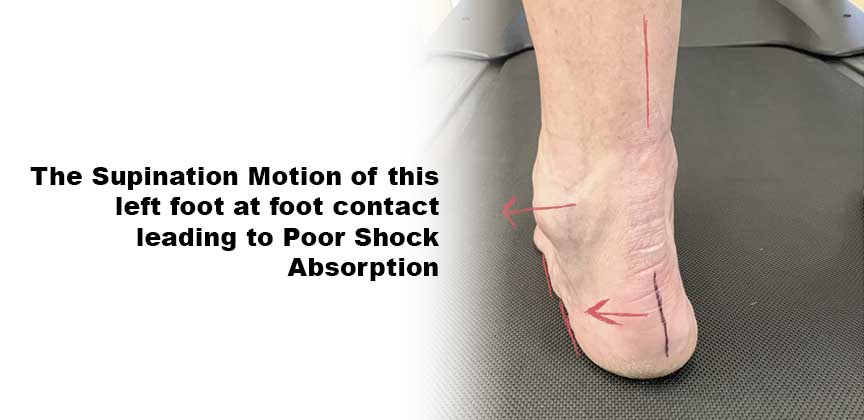
#3 Across different activities where forces were measured, there was 4-18% more ground reactive force measured, which diminished as the tape loosened. What does this mean? Perhaps we start with how the shock (ground reactive force) is dampened so that our joints (knees, hips, SI , and low back) are not traumatized as we walk. Our feet need to pronate and our knees need to flex. Quite simple on the surface. Pronation is the motion we need and any restriction of that motion can limit our ability to dampen GRF. Definitely, patients who are supinators at contact not only rob the foot of its shock absorption capacity, but subtalar supination extends the knee. This knee extension, at a time when it should be flexing to absorb shock can be devastating. No one knows how much increase in GRF is pathologic, but any increase done step after step after step is going in the wrong direction.