


Pediatric Flatfeet: Key Points from this Article (Part 2 of 4)
-

Last week I started discussing this article written by my friends from Spain. In a nutshell, research has never shown a good correlation between hypermobility patients utilizing the Breighton scale and Pediatric Flatfoot. Yet, it is a common finding in our moderate to severely pronated pediatric patients to find hypermobility syndrome. Therefore, the authors present a new method of testing pediatric flatfoot patients for the likelihood of having hypermobility. When found, it can change the course of treatment and positively affect the patient’s life. What are these tests that show a good to great correlation to hypermobility?
The authors present a new scale for us to use. It is called the Foot and Ankle Flexibility Index (FAFI) highlighting it as better for our professions. The 4 components of FAFI are: Lunge Test, Rest Calcaneal Stance Position (RCSP), Foot Posture Index (FPI) and 6 Minute Walking Test (6MWT). Last week, I reviewed the RCSP or Kevin’s Angle and how it helps us categorize the severity of overall pronation, especially when there is marked heel valgus. Today, I will discuss the Lunge Test and its correlation to hypermobility.
The lunge test is a weight bearing test for ankle joint dorsiflexion excursion. Under 35 degrees is considered tight, 35-38 normal, and over 38 degrees hypermobility or over flexible.
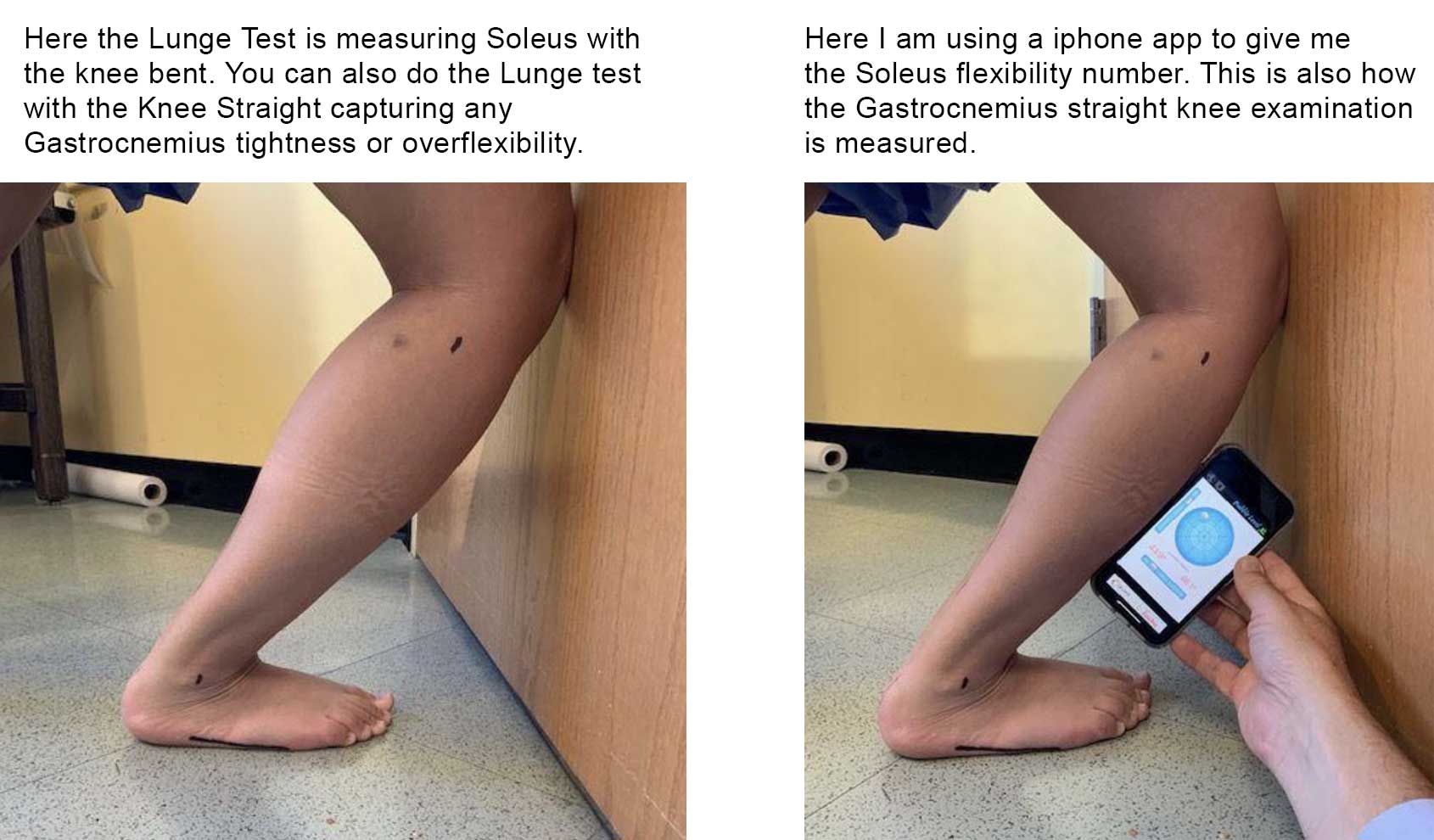
Since there are 5 methods to measure ankle flexibility, any will do, as long as it gives you the spectrum of tight, normal, and loose tendons. The Lunge Test was the one they utilized. Please review the ankle dorsiflexion excursion test in our BIQ section. Here is a link.
The secret to measuring ankle dorsiflexion excursion to be useful means you have to measure the exact same way every time, and you have to feel that the test you do captures normal flexibility, patients with tight achilles, and patients with over flexible achilles. Please review a previous post that shows my achilles flexibility examination technique.
Next week we will explore the Foot Posture Index used around the world to categorize patients along a spectrum of pronated to supinated feet.
